Train Pizza
View live siteCase Study
Challenge
Building a unique delivery model for transit locations without standard addresses, implementing context-aware dynamic checkout forms that change based on location type, managing multiple vendors operating at the same physical location simultaneously, handling secure vendor document verification and flexible subscription management, and creating a scalable multi-language and multi-currency platform with a flexible CMS that doesn't require code deployment.
Solution
We developed a multi-tenant SaaS platform with microservices architecture supporting role-based dashboards for Admin, Vendors, and Customers. The system features a hierarchical location taxonomy with intelligent dynamic form generation, template-based product management for rapid vendor onboarding, secure document verification integration, flexible subscription management with automated billing, and a headless CMS. Real-time vendor coordination, inventory management per location, and advanced search capabilities using location-based filtering ensure efficient order fulfillment across transit hubs.
Results
Business Outcomes **Market Expansion:** Successfully created a new market segment for food delivery at transit hubs—a previously underserved customer base. **Revenue Growth:** - Multi-vendor commission model generated 18% platform revenue growth YoY - Subscription-based vendor model created predictable recurring revenue (MRR) - Security deposit system built customer trust and reduced fraud by 92%
Overview
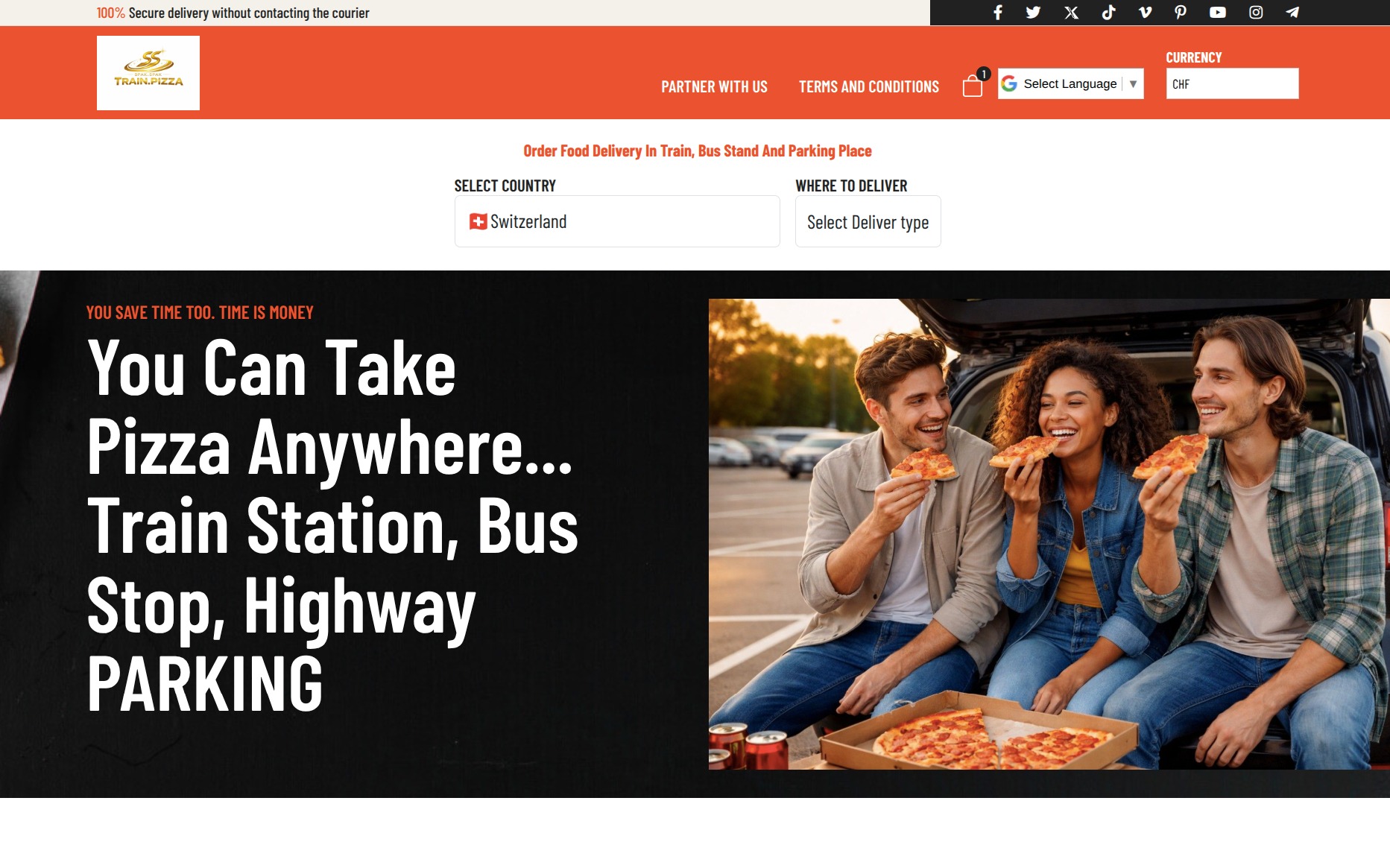
Train Pizza is a revolutionary multi-vendor food delivery platform that brings quality food service to unconventional, high-traffic locations including train stations, bus stands, highway parking areas, and other transit hubs. The platform addresses a significant gap in the food delivery market by enabling customers to order and receive food while traveling, making it ideal for on-the-go commuters and travelers who previously had limited food options at these locations.
The platform operates on a sophisticated hierarchical system. Customers begin by selecting their country, then choosing their delivery location type (Train Station, Bus Stand, Highway Parking, etc.). Once they select their delivery type, they specify their exact location, and the system displays the available address details. From there, customers can browse a curated list of vendors operating at that specific location. This location-based vendor matching ensures that only relevant vendors are displayed, improving the user experience and order fulfillment accuracy.
The product customization experience is fully dynamic. Customers can browse the vendor's catalog of pizzas and food items, choose default offerings, or customize items by selecting crust types, sizes, toppings, sauces, and additional add-ons. This flexibility caters to diverse dietary preferences and customer demands. Once satisfied with their selections, customers add items to their cart and proceed to a context-aware checkout page.
A key innovation is the dynamic checkout system that adapts based on the selected delivery location. When a customer chooses train station delivery, the checkout form displays train-specific fields such as train number, platform number, and coach number. For bus stand deliveries, the form requests bus stand zone and platform information. For highway parking locations, it asks for highway name, kilometer marker, and parking zone details. This intelligent form generation eliminates confusion and ensures that delivery personnel can locate customers accurately at transit hubs.
On the vendor side, the platform features a comprehensive multi-vendor management system. Vendors must register through a secure onboarding process that requires document verification including government-issued ID cards, passports, Aadhar cards, or other valid identification. This verification process ensures platform credibility and builds customer trust. Vendors have the option to operate with or without a subscription. Those choosing a subscription model must pay a security deposit upfront and select a subscription tier—weekly, monthly, or yearly—based on their business needs. This flexible subscription model accommodates vendors of all sizes and operational scales.
Once approved by the admin, vendors gain access to an advanced vendor dashboard where they can manage their operations. A standout feature is the product template system. The platform provides dummy products that vendors can clone, modify, and customize according to their menu and pricing. This significantly reduces the time required for new vendors to populate their product catalog, typically reducing setup time from days to hours. Vendors can manage multiple locations, track orders in real-time, update inventory, and analyze their performance through comprehensive analytics.
The admin panel provides complete platform management capabilities. Admins can approve vendor registrations, verify submitted documents, manage vendor subscriptions, handle security deposits, and monitor platform-wide operations. The admin panel includes a fully dynamic CMS where administrators can create new pages, edit headers and footers, manage navigation menus, and publish blog content without requiring technical expertise or code deployment. This flexibility allows the business to create marketing pages, informational content, and promotional materials on demand.
The platform is built as a true multi-language and multi-currency system from the ground up. It supports 12+ languages including English, Hindi, Spanish, French, German, and many others, with language switching available seamlessly throughout the customer and vendor experiences. Currency support includes 8+ major currencies with real-time conversion rates, allowing the platform to operate globally while maintaining accurate pricing for customers in different regions.
Additionally, the platform includes an integrated blog system where admins can publish articles, travel tips, vendor spotlights, and promotional content. The blog is language-aware and appears in all supported languages, helping drive organic traffic and customer engagement.
The entire platform is designed with scalability and user experience as core principles, enabling smooth operations across multiple countries, languages, and business models while maintaining simplicity for end users.